

How Mythology Became the Biggest Design Influence in Men’s Accessories in 2026
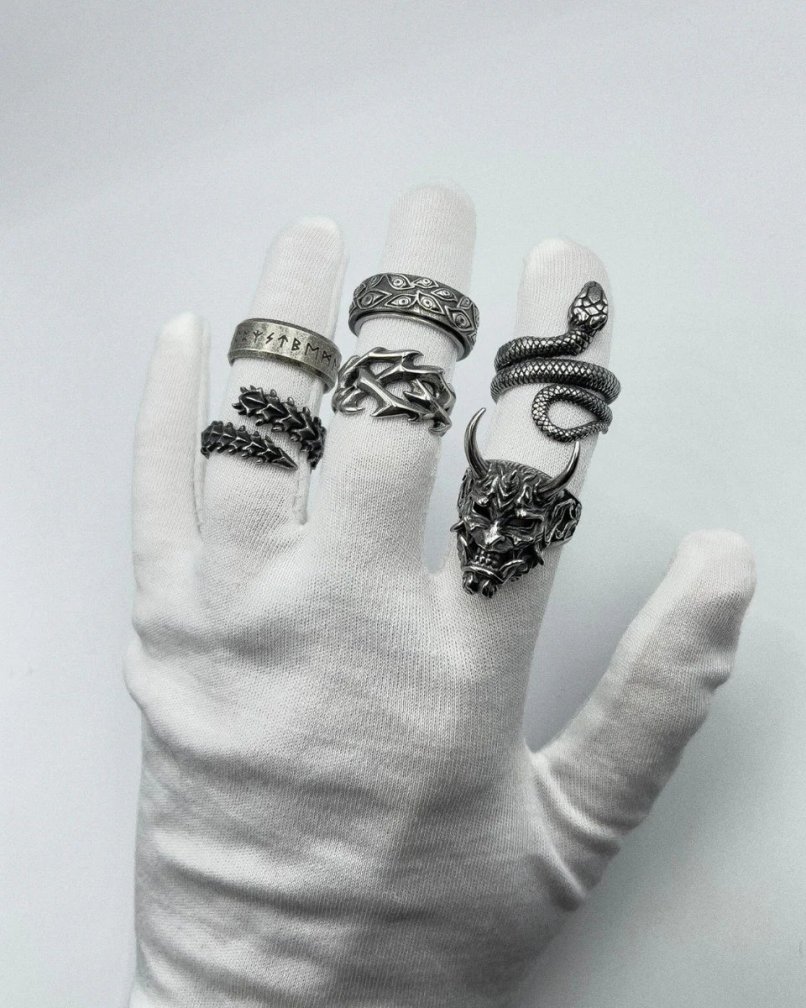
Men are wearing serpents on their fingers. Skulls on their knuckles. Dragons wrapped around their thumbs. Ancient symbols cast in modern metal, sitting right next to a smartwatch and a cup of cold brew.
This is not cosplay or subculture. It is one of the most significant design movements in men’s fashion right now, happening almost entirely through accessories.
Mythology inspired jewelry for men has moved from the fringes of alternative fashion into mainstream style. The designs are showing up on tech founders, musicians on festival stages, athletes in postgame press conferences, and regular guys who want something on their hand that means more than a plain band.
The Numbers Behind the Movement
The mythology and symbolism segment of men’s jewelry is among its fastest growing categories. Grand View Research estimated that themed and symbolic men’s jewelry grew at nearly 12 percent annually between 2023 and 2025, outpacing the overall market by more than two percentage points.
Search data tells a similar story. Google Trends shows searches for “snake ring men,” “skull ring,” and “mythology jewelry” have increased consistently since 2022. Interest is global, with strongest growth in the United States, Northern Europe, Southeast Asia, and Latin America.
Amsterdam based jewelry brand Omega Amsterdam, which specializes in mythology and symbol driven designs alongside their minimalist stainless steel rings collection, reported that mythology inspired pieces consistently outperform minimalist designs in both sales and social engagement.
Why Mythology Resonates Now
Carl Jung’s framework proposed that human psychology is shaped by universal symbolic patterns: the hero, the shadow, the serpent, the guardian. These patterns appear across every culture and mythology.
Dr. Susan Rowland, professor of Jungian studies at Pacifica Graduate Institute, has written that modern consumers are drawn to mythological symbolism because digital life has stripped away traditional rituals that once gave existence meaning. “When people choose to wear a symbol, they are performing a small act of personal mythology. They are saying this archetype is part of who I am.”
For men, who have historically had fewer outlets for symbolic self expression, a mythological ring offers narrative. It tells a story about the wearer without requiring a single word.
The Archetypes Men Are Choosing
Serpents and dragons lead the category as transformation symbols appearing across world mythology. Men who choose these designs are drawn to themes of personal change.
Skulls remain popular but their meaning has shifted to memento mori, a reminder to live fully. Mythological figures like Medusa, Anubis, and Odin appeal to men who identify with specific narrative qualities.
The Material Matters
Stainless steel has become the dominant material for mythology inspired men’s jewelry. The audience buying these pieces wants wearable symbols that survive their actual lifestyle, not artifacts kept in jewelry boxes.
Materials scientist Dr. Elena Versace notes that stainless steel’s reputation has transformed completely. “Ten years ago, stainless steel jewelry was seen as a budget alternative. Today, it is a lifestyle choice. The durability communicates that the wearer values function alongside form.”
What This Tells Us About Men in 2026
Men are hungry for symbols that connect to something older and more personal than consumer culture. The mythology on their fingers is a quiet declaration that meaning matters.
A ring shaped like a serpent is not just fashion. It is a conversation between the wearer and an archetype that has existed since humans first told stories. That conversation is happening on millions of hands in 2026.
Follow Fashion Model Directory on Linked In, Facebook, Twitter, and Pinterest, !